Thursday, March 17, 2011

From the Desk of Mike Turner, Golf Course Superintendent

Aerification


            Here we are at the doorstep of another aerification season at The Reserve.  We’ve had a lot of precipitation this winter, but we feel that the proactive approach with our greens program is paying dividends now.  The greens are as healthy as we can remember and they’ve just been subjected to a cool, wet winter!  Leading up to aerification, we sometime have people ask, “Why do have to punch the greens when they are playing so great?” We thought this would be a good opportunity to give a little insight as to why aerification is important.
            Core aeration (actually removing plant material) and sand topdressing are two of the “necessary evils” that promote long-term plant health;  they allow for proper air movement within the soil profile,  improve drainage capacity that is compromised due to daily cultural practices (mowing, rolling, foot traffic, etc.), and provide new growth medium for the tightly growing bentgrass/poa.  We want the greens to be as healthy as possible heading into aerification for a number of reasons. 
            The health of the turf prior to aerification determines how much damage will occur throughout the process.  Also, when the turf is healthy before aerification, it recovers faster, which is critical as we begin a new golf season.  Aerification is a very labor-intensive process that creates a lot of headaches in the short-term.  The process is a traumatic experience for the members, the grounds crew, and of course, the turf.  We wouldn’t invest the time and energy doing these things if we didn’t believe that they are absolutely necessary! 
            This email briefly touches on the benefits of core aeration. If anyone would like to discuss this or anything other topic, at length, feel free to contact me!

Thank You,

Mike Turner, Superintendent

Saturday, March 12, 2011

Drainage Work

  The fact that scores are now being posted, and The Reserve hosted its annual Pro-Am this past Monday, means that Spring is just around the corner.  The weather turned out to be very nice for the tournament Monday, but just like a typical Winter in Oregon, it turned on us very quick.  The golf courses are saturated at this point, and the 10-day forecast doesn't look good for much drying time.  The soft and muddy soil conditions prevent us from doing any kind of mowing outside of greens, collections/approaches, and tees.  Although we'd love to be able to get out there and mow the rough and fairways, doing so would make a mess that no one wants to see. 
  It's not easy to put a positive spin on this dreary weather, but without mowers running, we can use the extra manpower to get some more drainage in on the courses.  This past week we were able to get two drain projects done on the South Course.  The first was on #13, on the right side of the fairway about 125 yards out from the green.  It was a fairly small project, but it will help to dry up an area that is always wet.  The other drain project was on #16 South.  This was a more tedious undertaking, but I have no doubt the results are well worth the effort.  This one is located on the left half of the fairway just past the left fairway bunker, and goes out into the rough towards the pump house.  This will help to dry up a landing area for those who like to risk it and hit a driver off the tee on that hole.  
  Once Spring gets here and the mowers start running non stop, projects like this won't be easy to fit in.  In the mean time, we'll take what mother nature gives us and do our best to continue to improve the playability of the golf courses.  Again, we are happy to hear any suggestions you may have regarding areas you feel could use a little drying out!   

Thursday, February 17, 2011

Greens Maintenance

We were scheduled to topdress both courses on Monday and Tuesday but the rainy weather of the winter makes it virtually impossible to drag in the sand.  Our topdressing schedule is planned months in advance and while we will occasionally get a nice window to apply sand, that's not usually the case.  We had a lot of luck this past season with opening up the greens and getting oxygen down into the root zone and felt like this would be an ideal time to use that concept, but during the winter.  During the growing season we use 1/4 inch hollow tines and pull a core out of the greens, but, since wet sand doesn't clean-up well, we equipped our aerifiers with 1/4 inch solid tines, which don't pull a core.  Besides the benefit of increasing gas exchange in the root zone, this process also aids in water percolation through the greens profile.  We don't feel that playability was affected and overall we've been very pleased with the results.  In the future, we will look to continue this practice when applicable.  
  In other news, the extremely wet conditions this week have prevented us from doing any mowing so we had some time to dive into a drain project.  We tackled the fairway and approach area on #8 South from the left fairway bunker towards the green.  I think that some of the best benefits from this drain line will be seen during the summer months.  We will be able to put an adequate amount of water down to keep the area lush and green in the heat of the summer, yet still have a firm enough landing so that some of us shorter hitters have a chance of getting home in two.  We'd like to hear any suggestions you might have on areas that could benefit from improved drainage so we can add them to our list and tackle the most problematic areas first.  Have a great rest of the week and weekend!


Thursday, February 10, 2011

Course Updates

  I'd like to take this opportunity to review, as well as update the progress of a few of the topics I've discussed in previous postings.  Right off the bat, lets talk about geese.  We all know that their presence as well as the presents they leave behind are very much a nuisance.  Without the ability to use agricultural fireworks, we've had to revert to some techniques we've used in the past.  In conjunction with physically chasing them off, we've placed white trash bags on wooden stakes and posted them around the ponds.  The white bags are suppose to replicate swans and discourage the geese from landing.  Although it's not 100% effective, it can keep some of them away.  Also, we've placed a flashing construction light out on the bank on #3 north.  It has been said that the flashing light will disrupt their sleep pattern and they will seek shelter elsewhere.  It's not proven but we'll see how it works. 
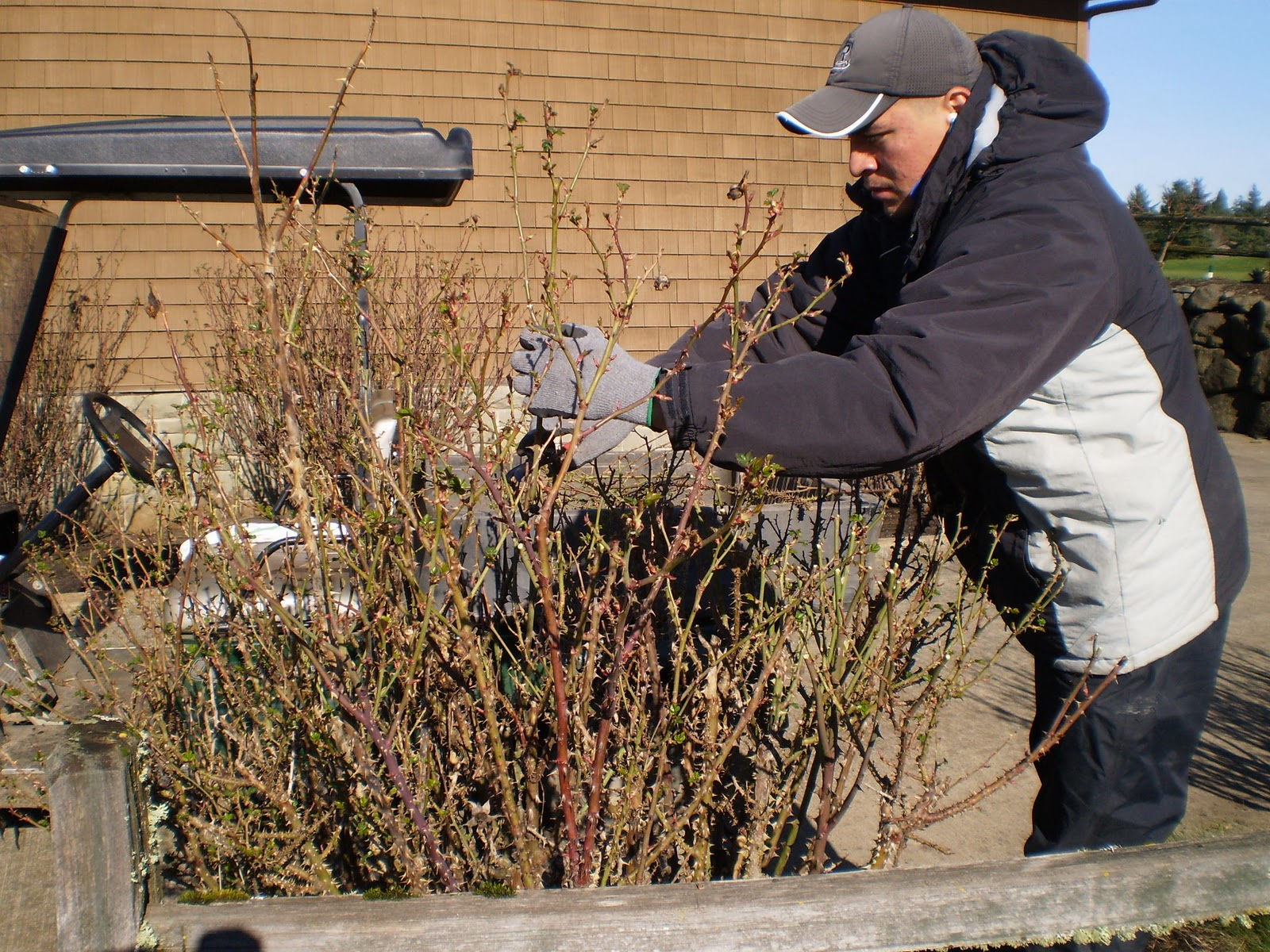
  In other news, the trimming of the photinia has been finished on the south and we continue to trim the photinia on the north.   Our hazard stake replacement and blackberry removal projects are progressing and we've also began to trim the roses around property in preparation for the growing season.  If anyone has any other questions related to the golf course, we're always happy to answer them.  Have a great week and tee it up while the suns still out!   


Thursday, February 3, 2011

The Crossing

  In the coming months, you will notice some work being done in the bark area to the south of the pond on 18 North.  We will be renovating the area into a wedding site that will include 12,000 sq ft of maintained turf with views of the clubhouse, pond, and 18 green.  The area will be able to accommodate ceremonies both big and small, as well as enhance the beauty of the grounds around the clubhouse.  We hope that you've been enjoying the great weather as of late and been able to enjoy what we would consider to be some great winter playing conditions!  


Friday, January 21, 2011

#11 South Update

  Barring any major changes in weather or health, #11 South green will be open for play beginning Saturday morning, 1-22-2011.  Thank you for your patience and understanding.

Tuesday, January 18, 2011

Hazard Markers

Due to a number of factors, we've decided to try something a little different with our hazard markers for the upcoming golf season.  Instead of purchasing new composite stakes to replace broken, damaged, and missing markers, we are building our own markers out of PVC piping.  One of the main reasons for this change is the rising cost of our current markers.  A new stake made from composite material can run roughly seven dollars per stake!  It is inevitable that each season there will be stakes that are ruined by mowers, golfers, and Mother Nature, not to mention that fact that it seems like some just grow legs and walk away.  To maintain a supply on hand as well as ensure that there is an adequate number of markers on the course can become a very costly venture.  Another problem we have with our current system is the fact that markers are moved by both golfers and maintenance crew members and then not returned to their proper location.  This can become a bigger problem in the winter when we do not paint the hazards and golfers rely on a stake to stake line of sight to define hazard boundaries.
The new markers that we're making will be very similar to the 100 and 150 yard markers in the fairways, except they are made from plastic instead of metal.  To make our concrete form, we use the leftover one gallon pots from last year's annual flowers that would otherwise be disposed of.  Once we've filled the pot, we place a seven inch long piece of 1 1/4 inch PVC in the concrete and let it dry over night, this will be our sleeve.  For the markers themselves, we use 1 inch PVC cut in 30 inch long pieces.  We place a cap on top of the pipe and then paint it the appropriate color.  The major benefit we see with this new system, besides cost savings, is that the markers can only be put back in one spot and they won't be moved all over.  We've began the process of transitioning to the new system in order to have it fully in place by the beginning of the golf season.  In the coming months, we would like to hear your comments, both good and bad, as we move forward with this transition.